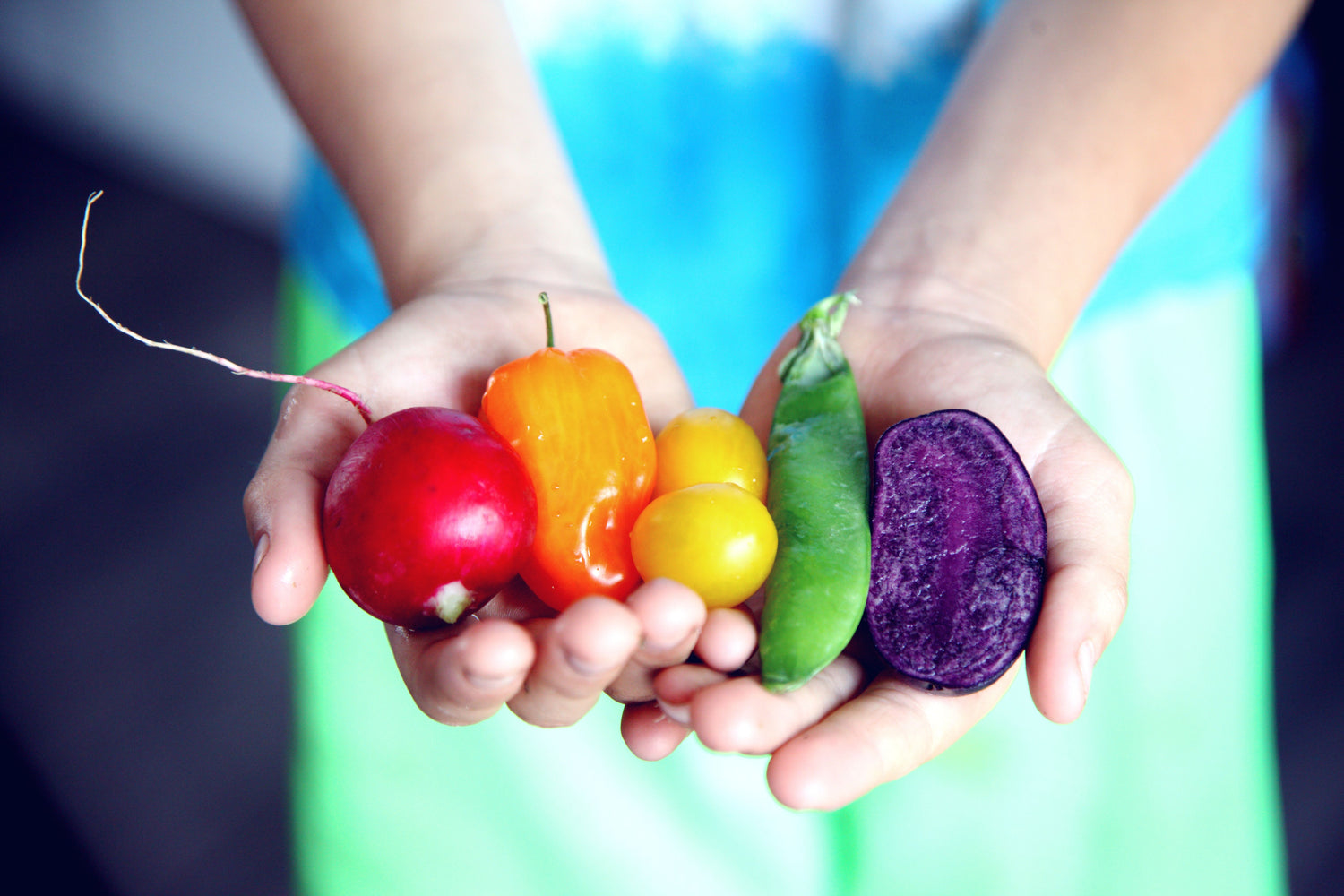
Helping kids eat more fruits and vegetables can be challenging. New colors, flavors, and textures may feel unfamiliar, and mealtime can quickly turn into a negotiation.
One simple way to make healthy foods feel more approachable is to encourage children to “eat the rainbow.”
Eating the rainbow means offering fruits and vegetables in a variety of colors. It is an easy, visual way to introduce children to different foods while supporting a varied and balanced diet. A plate filled with red strawberries, orange carrots, green broccoli, and purple grapes can also feel more interesting and inviting to a child.
Why Colorful Foods Appeal to Kids
Children often notice how food looks before they think about how it tastes. Bright colors, different shapes, and interesting arrangements can spark curiosity and make fruits and vegetables feel more fun.
Parents and caregivers can use color to create positive experiences around healthy eating. At the grocery store, children can help choose a fruit or vegetable in a color they have not eaten recently. At home, they can arrange foods into a rainbow, count the colors on their plate, or help prepare a colorful snack.
These simple activities give children a sense of involvement. When kids help select or prepare food, they may feel more comfortable exploring it.
What Does “Eat the Rainbow” Mean?
The phrase “eat the rainbow” encourages people to enjoy fruits and vegetables from a variety of color groups.
Different colors often indicate the presence of different vitamins, minerals, and naturally occurring plant compounds. Eating a range of colorful foods throughout the week can help children receive a broader variety of nutrients.
The goal is not to include every color at every meal. Instead, families can focus on offering different colors over time.
The Nutritional Benefits of Colorful Fruits and Vegetables
Each fruit and vegetable has its own nutritional profile. No single food provides every nutrient a growing child needs, which is why variety is important.
Red fruits and vegetables
Tomatoes, strawberries, raspberries, watermelon, and red peppers contain a range of vitamins and naturally occurring plant pigments, including lycopene and anthocyanins.
Orange and yellow fruits and vegetables
Carrots, sweet potatoes, squash, mangoes, oranges, and yellow peppers are often sources of beta-carotene. The body can convert beta-carotene into vitamin A, which supports normal vision and immune function.
Green fruits and vegetables
Spinach, broccoli, peas, green beans, avocado, and kiwi can provide nutrients such as folate, vitamin K, and vitamin C.
Blue and purple fruits and vegetables
Blueberries, blackberries, plums, eggplant, and purple cabbage contain pigments called anthocyanins, along with a variety of vitamins and plant compounds.
White and tan fruits and vegetables
Cauliflower, mushrooms, garlic, onions, potatoes, and bananas may not be brightly colored, but they still provide important nutrients and belong on a varied plate.
Offering foods from several color groups can help children experience a wider range of flavors, textures, and nutrients.

How to Help Kids Eat More Fruits and Vegetables
Encouraging healthy eating habits does not require a perfect plate. Small, consistent changes can make fruits and vegetables feel more familiar over time.
Make healthy eating a game
Ask children to count the colors on their plate or find a new color during the weekly grocery trip. You can also challenge the family to try one new fruit or vegetable each week.
Let children help build their plate
Children can wash produce, choose between two vegetables, stir ingredients, or arrange food by color. Giving them an age-appropriate role can create a sense of ownership.
Introduce new foods gradually
Some children need to see or taste a food several times before they accept it. Start with a small serving and avoid placing pressure on the child to finish it.
A single piece of a new vegetable beside familiar foods is often more approachable than a large portion.
Pair unfamiliar foods with family favorites
Serve a new fruit with a familiar yogurt, add a new vegetable beside a favorite meal, or include one unfamiliar ingredient in a well-known snack.
Familiar foods can make new options feel less intimidating.
Offer colorful snacks
Colorful snacks can be simple. Try mixed berries, apple slices, sliced peppers, carrots, cucumbers, fruit salad, or vegetables with a familiar dip.
Offering two or three colors at snack time can add variety without requiring a complicated recipe.
Rotate fruits and vegetables
It is easy to rely on the same familiar foods each week. Rotating produce can expose children to different nutrients, flavors, and textures.
Try switching between different berries, choosing a new variety of apple, or serving vegetables in different forms, such as raw, roasted, steamed, or blended into a familiar dish.
Keep portions manageable
Large servings can feel overwhelming, especially when a food is new. Begin with a small amount and allow the child to ask for more.
What If Your Child Refuses Colorful Foods?
Food refusal is common, particularly during early childhood. A child may reject a food because of its appearance, smell, taste, or texture.
Try to remain patient and continue offering a variety of foods without forcing the child to eat. A food that is rejected today may feel more familiar after several additional exposures.
Parents can also model healthy eating by enjoying fruits and vegetables with their children. Seeing trusted adults eat a food can help make it feel safer and more familiar.
Children with significant dietary restrictions, feeding difficulties, food allergies, or nutritional concerns should be evaluated by an appropriate healthcare professional.

Building Healthy Eating Habits Over Time
Healthy eating habits develop gradually. One colorful meal will not change a child’s preferences overnight, and every meal does not need to be perfectly balanced.
What matters is the overall pattern.
Regularly offering a variety of whole foods helps children become familiar with different tastes, colors, and textures. Over time, these repeated experiences can support a broader and more flexible approach to eating.
For generations, Kirkman has supported families with a thoughtful approach to nutrition. Encouraging children to enjoy a colorful variety of fruits and vegetables is one practical way to help build healthy habits that can grow with them.
Start With One More Color
Eating the rainbow is not about creating perfect meals. It is a simple way to make nutritional variety easier for children to understand and more enjoyable for families to explore.
Start by adding one extra color to the plate, choosing one new fruit at the store, or letting your child select a vegetable for dinner.
Small steps, repeated consistently, can help colorful foods become a familiar part of everyday family life.